What You’ll Learn on a Discovery Flight at LIFT Academy
Maybe you love to travel. Maybe you’ve always looked up when a plane passes overhead. But you’ve never been at the controls, and you’re not sure a career as a pilot is right for you. A discovery flight is how you find out.
We sat down with Tim Goudie, Assistant Chief Flight Instructor and Manager of Flight Instruction at LIFT Academy, to discuss what people really learn in that first hour in the air.
Tim has been a flight instructor since 2019. He lectured and instructed on multi-engine aircraft at Purdue University before joining LIFT three years ago. Today he’s part of a team of five Chiefs and Assistant Chiefs who train and support hundreds of LIFT flight instructors.
Tim grew up in Johannesburg, South Africa, and knew he wanted to fly from a young age. He took his first flight in an Aeronca Champ taildragger at an airfield outside Cape Town.
“I remember it clear as a bell,” Tim says of that first flight. “That moment stays with you forever.”
If you’re wondering what to expect from your first time flying, here are three things Tim says you’ll learn on a discovery flight.
1. What flying really feels like
A discovery flight is a one-hour introduction to flying. LIFT offers them on weekends for people who can’t get away during the week. You’ll sign a waiver and get a short briefing. Then you head up with a LIFT pilot, who takes you through turns, climbs and descents. Once you reach clear airspace, you’ll get to take the controls yourself.
According to Tim, there are a few things that surprise almost everyone.
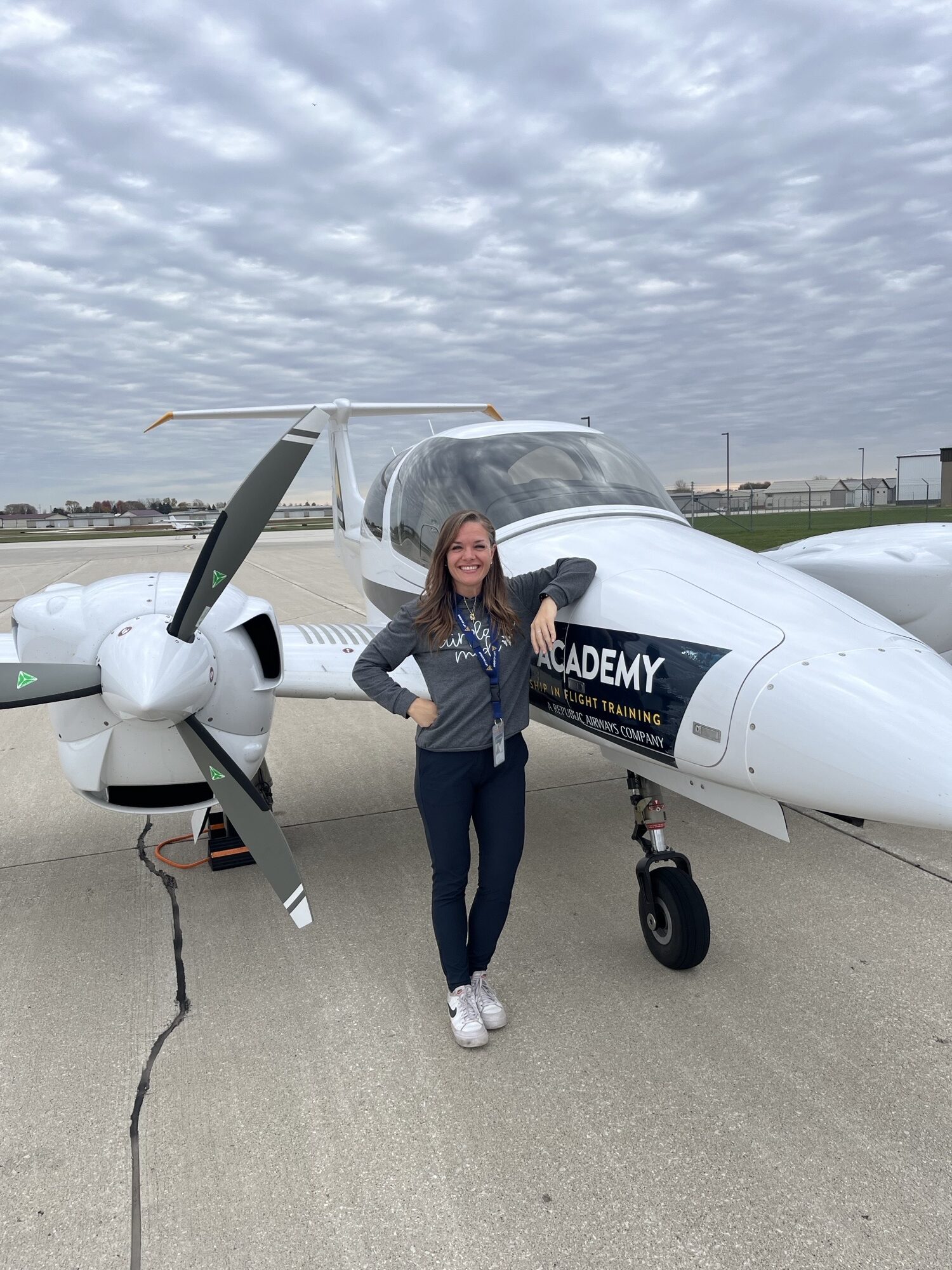
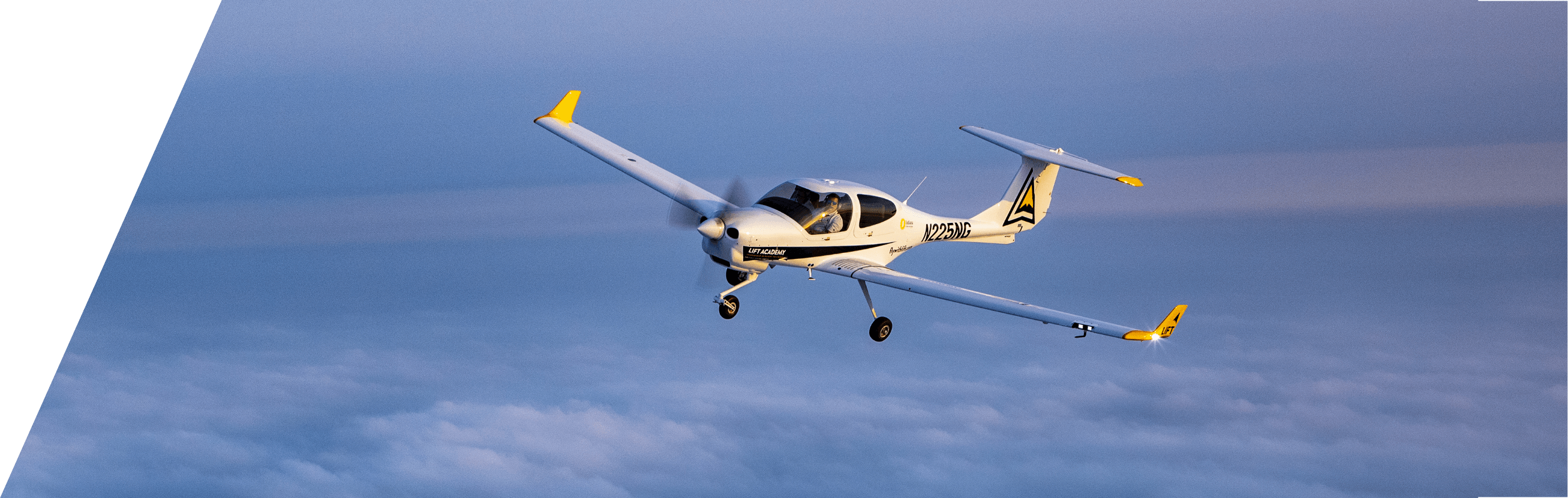
First, you’re moving in three dimensions, unlike driving, which occurs in two. “The plane reacts immediately,” Tim says. “You pull the stick, and the nose rises.” First-timers are often amazed at how responsive the Diamond DA40 NG is.
Second is the view. It’s one thing to see the ground from an airliner window. It’s another to see it from a training aircraft. Tim still loves matching the sectional chart to the landscape below: a highway, a dam, a college campus. “Even with all the technology, looking out the window and knowing exactly where you are will never be beat.”
And third, you feel everything. Small aircraft feel every bump and thermal. “We need students to understand what flying an aircraft really feels like,” Tim says.
His favorite moment is when he hands over the controls. “They say, ‘But I can’t fly!’ Oh yes, you can.” Then they learn what happens when they push left, push right, pull up and push down. “That’s the moment the lightbulb goes off. It goes from just being in an aircraft to actually flying an aircraft.”
2. What airline-level training looks like
Most people come for the thrill of flying. Many leave talking about the discipline they saw.
From the moment you get to the airport, you see how a professional airline runs. Your pilot works through strict checklists, talks on the radio and sets up the Garmin G1000 display. “You see what that skill level looks like, and you see the communication that’s necessary,” Tim says.
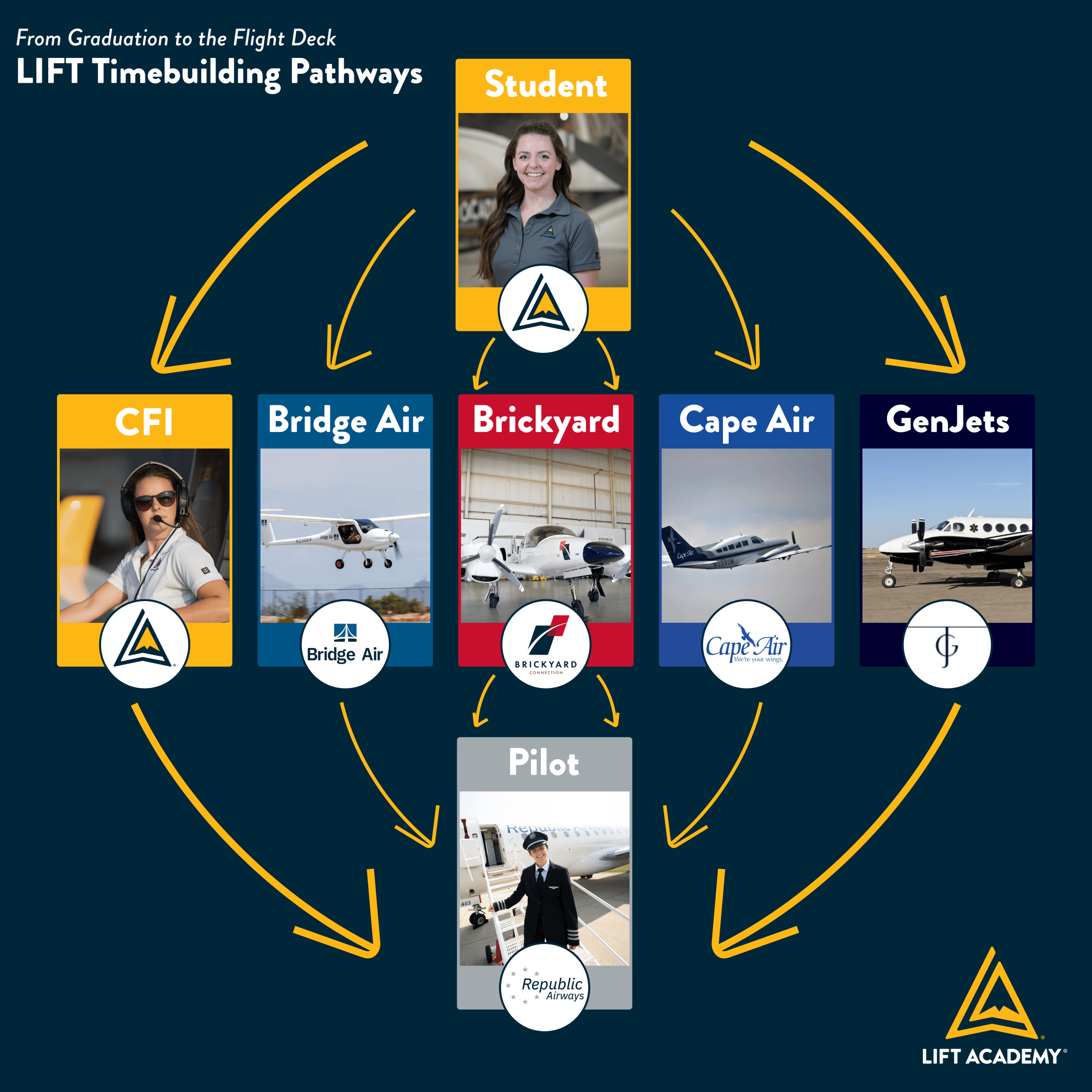
That discipline isn’t just for show. LIFT has a direct pathway to Republic Airways, and students train to the airline’s standards from their very first lesson. “I tell new students, ‘You are being trained to airline standards from day one,’” Tim says. “These safety standards are exactly how it works at Republic Airways.”
You’ll also get a first look at the instructor-student relationship that will shape your training. Your discovery flight shows you that you can rely on your instructor’s experience, knowledge, and skill throughout your time at LIFT.
3. Whether a pilot career is right for you
An important thing a discovery flight tests isn’t just your hands on the stick; it’s also what’s going on in your head. “If they come away even more convinced that this is the path they want to follow, then the discovery flight did its job,” Tim says.
Most people do. Tim estimates that 99% of first-timers land with a huge grin, saying things like “This is the greatest thing I’ve done” and “The best hour I’ve ever spent.” Instructors can usually tell during the flight. “There’s a moment of joy and jubilation,” Tim says. “It’s an unmistakable smile.”
That joy matters because training to become a professional pilot is demanding. “Flying is incredible, but there are no shortcuts in training,” Tim says. “You have to put in the hard work. You have to be motivated. You have to be committed to making it happen.” Enthusiasm doesn’t guarantee success, but it’s often a good sign that someone will give their all to training and see it through.
If you already have some experience, maybe even a private pilot certificate, a discovery flight still helps. If you learned in a Cessna, you’ll get to try the DA40 NG aircraft you’d train in at LIFT and see what the program is like.
And if you choose this path, the joy doesn’t fade. “Every time I get in an aircraft here, I smile a broad smile,” Tim says. “I go home, and my wife says, ‘I can see you’ve been flying.’”
After you land
After you land, your pilot debriefs with you. They’ll ask how the flight felt and answer your questions. LIFT’s admissions team, who are often on-site, will follow up to talk through the next steps and any questions the flight raised.
Those conversations focus on two things. The first is professionalism: how LIFT students train, study, dress and show up. The second is the path ahead. “The harder you work, the more you put in, the higher chance you have to succeed in this industry,” Tim says. Graduates of many flight schools have to find a job with an airline on their own. At LIFT, the pathway to Republic Airways “takes you right to the door of opportunity.”
Book the flight
Tim’s advice for anyone on the fence is simple: Do it. “Flight training isn’t a hobby. It’s a big investment,” he says. “One hour in the air will either convince you that you’re making the right choice or keep you from investing in something you’re not comfortable with.”
Ready to find out if flying is for you? Book your LIFT Academy discovery flight today.